Fibermaxxing: what the research says about eating more fibre
"Fibermaxxing" is the latest name for an old idea: deliberately eat more fibre and talk about it online. Before you overhaul your shopping list, it helps to separate trend posts from what reviews actually say.
In brief
- Reynolds et al. (2019) pooled 185 prospective studies and 58 trials on carbohydrate quality (Lancet31809-9)).
- Highest vs lowest fibre intake was linked to 15 to 30% lower risk for outcomes such as death, heart disease, type 2 diabetes and colorectal cancer in observational analyses.
- The largest risk reductions clustered around 25 to 29 g per day in that review.
- UCLA Health (2026) notes US guidance of about 25 g (women) and 38 g (men), while many people sit near 15 g; they advise slow increases, more water, and caution with IBS, Crohn's or colitis (UCLA Health).
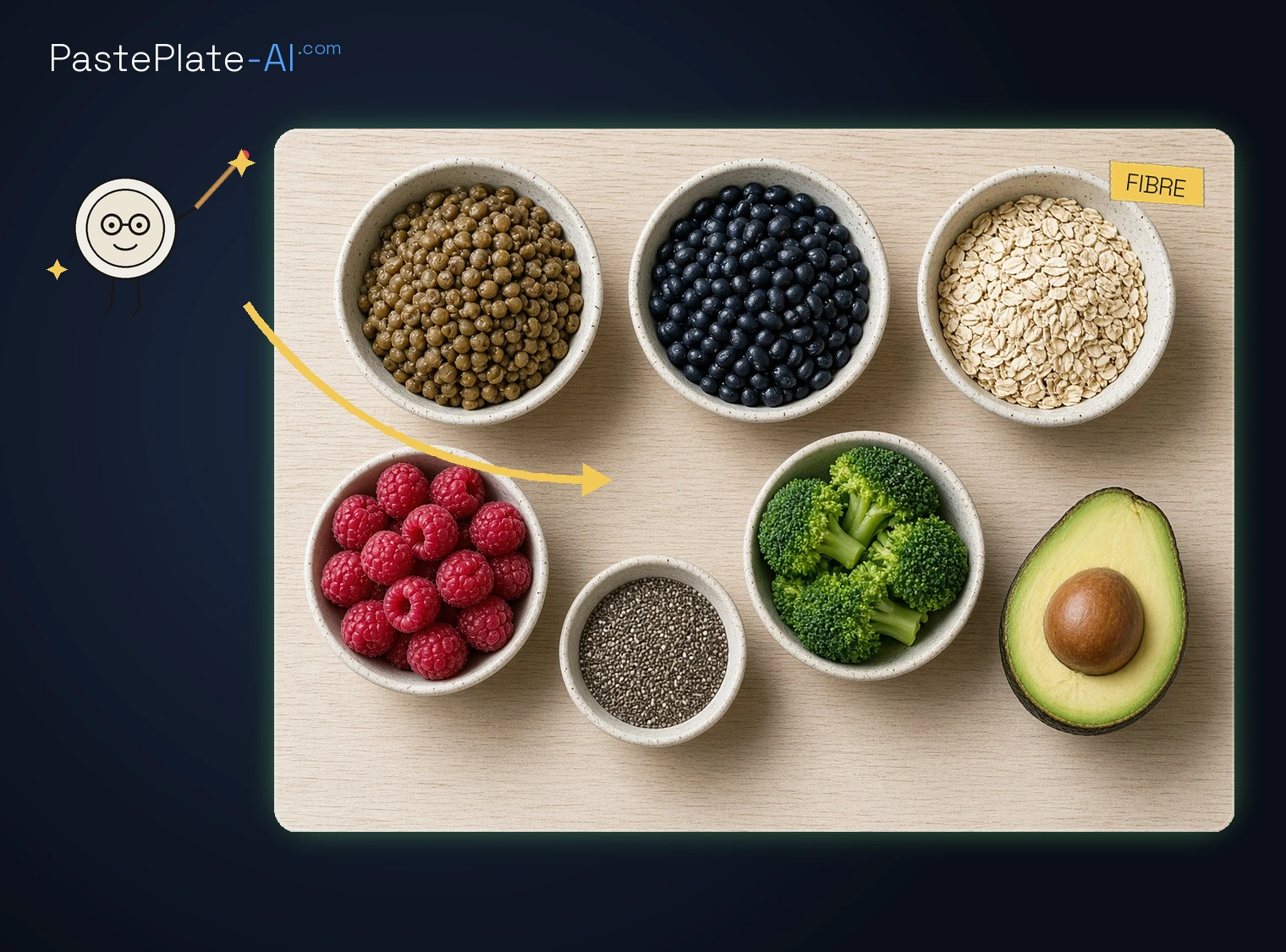
What "fibermaxxing" means online
Clinicians describe fibermaxxing as consciously raising fibre through foods such as legumes, whole grains, berries and vegetables. Half an avocado is often cited as about 5 g, a cup of raspberries about 8 g, and a cup of lentil soup about 8 g in popular explainers, including UCLA's piece.
Those examples are portion-dependent. Weigh or measure if you are tracking closely.
What the Lancet review found
Reynolds and colleagues graded evidence across diseases. For dietary fibre specifically, observational comparisons consistently favoured higher intake. The review is careful about causality: cohort studies show associations; trials are shorter and narrower.
The 25 to 29 g per day band is where the curve looked most favourable for several endpoints in their models. That is a population pattern, not a personal prescription.

The gap many adults face
If you are near 15 g per day, jumping straight to 30 g can mean gas, bloating or cramping. UCLA and gastroenterology clinics routinely suggest gradual change and fluid intake. People with IBS, Crohn's disease or ulcerative colitis should talk to their clinician before aggressive increases.
Variety still counts
Fibre comes as soluble and insoluble forms across plants. Rotating sources spreads the load on your gut and your menu.

A slow build pattern
- Add one higher-fibre food this week (beans, oats, an extra vegetable).
- Drink water with the change.
- Wait about a week before another big jump.

What this is not
- Not a fix for acute gut flares.
- Not a reason to skip medication or clinical care.
Limits
- Observational risks dominate the big numbers; individual response varies.
- Fibre supplements were not the focus of the social trend, but they behave differently from whole foods.
- US-centric intake averages in media pieces may not match your country labels.
This post is general information, not medical or dietary advice.
Sources
- Reynolds A. et al. (2019), "Carbohydrate quality and human health: a series of systematic reviews and meta-analyses", The Lancet 393:434-445. doi.org31809-9)
- UCLA Health (6 Jan 2026), "Is 'fibermaxxing' a sound nutrition trend?" uclahealth.org
PastePlate-AI on your phone
The logbook stays on your device. You bring the chat AI you already use.
This blog does not give medical advice. Health disclaimer.