When teens go to bed later: what a New Zealand study saw in food and activity
Teen sleep is messy. A 2026 Journal of Adolescent Health paper tracks bedtime clock time, not just hours slept, and links it to next-day movement and same-day eating in a detailed diary study.
In brief
- 75 young people, 11.0 to 14.9 years, Dunedin, New Zealand.
- 7 days accelerometry plus three 24-hour diet recalls; bedtimes from diaries (Taylor et al., 202600344-7/fulltext); DOI 10.1016/j.jadohealth.2026.07.030).
- Each hour later bedtime: next day 3.8 min less light activity and 14 min less moderate-to-vigorous activity.
- Exploratory same-evening links when bedtime was later: 25 min more sitting, +618 kJ from ultra-processed foods, +732 kJ from "noncore" foods, 419 kJ less from "core" foods.
- Next-day diet differed little in the analyses highlighted.
- Daytime activity did not predict that night's sleep; bedtime time correlated more strongly than total sleep duration.
- Observational, self-reported bedtime, not causal.
This is not the same question as our post on short sleep and next-day eating, which looked at lab studies that shortened sleep. Here the focus is teen clock time at bed.
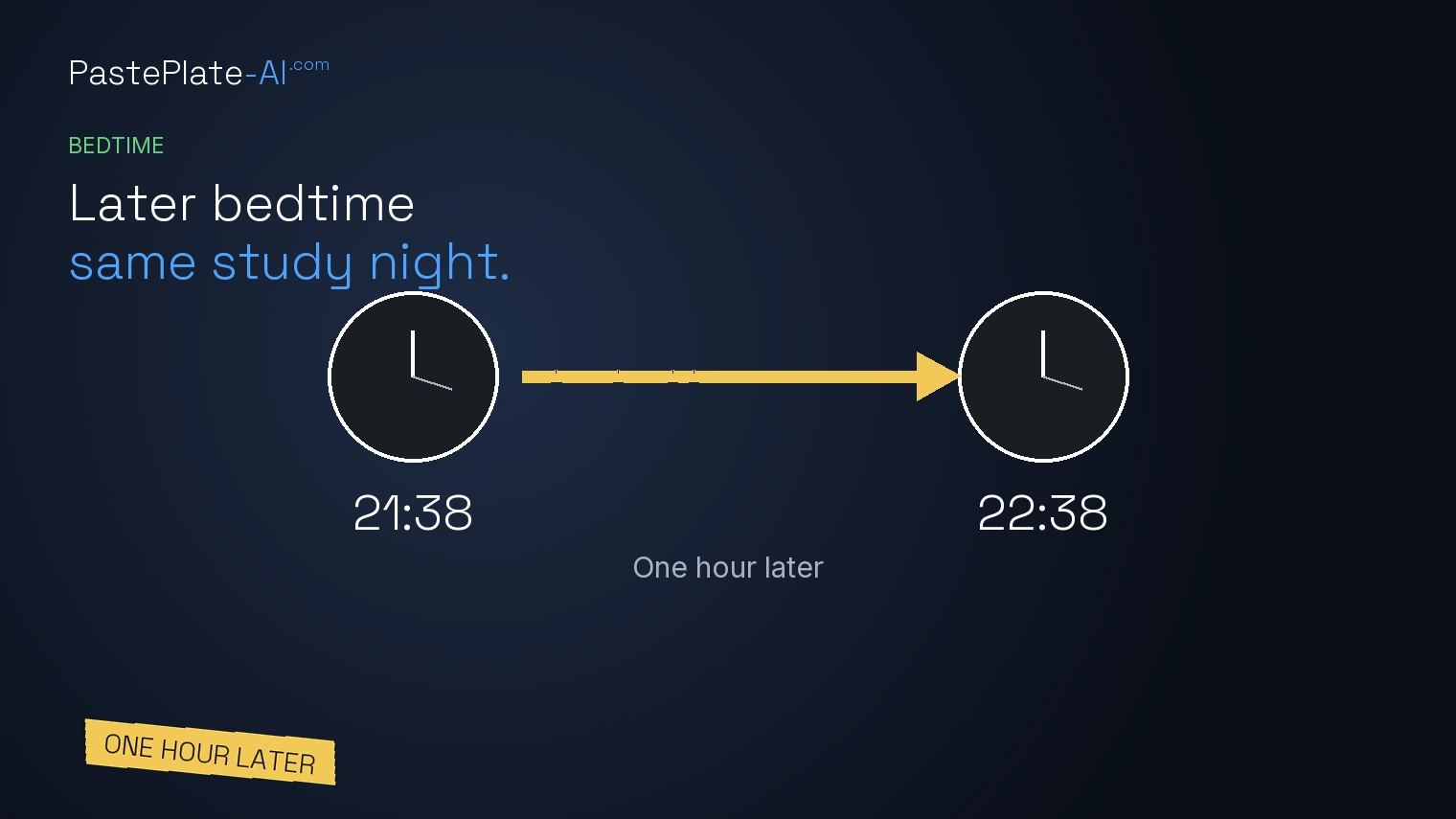
How the week was measured
Accelerometers captured movement intensity. Diet recalls split foods into core, noncore and ultra-processed groups using the study's definitions. Bedtimes came from sleep diaries, so social jet lag and weekend lie-ins show up as reported.
Next-day movement
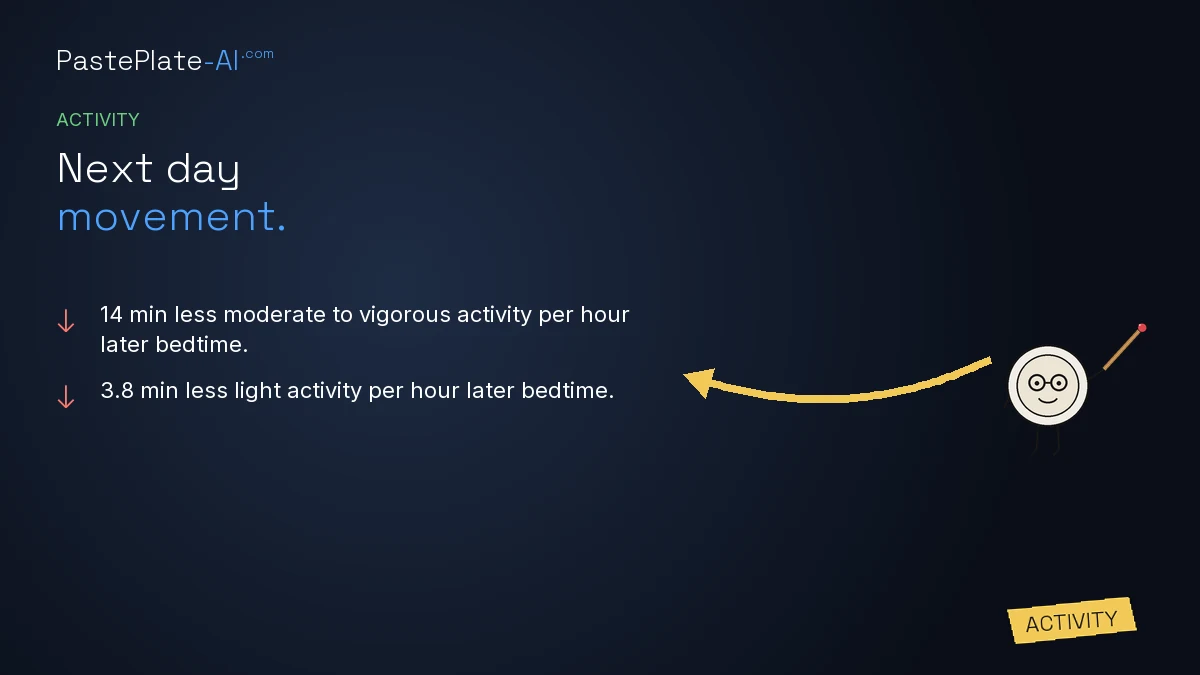
Fourteen fewer minutes of moderate-to-vigorous activity per hour later bedtime is modest, but it stacks across a school week. Light activity dipped 3.8 minutes per hour delay as well.
Same evening, exploratory patterns
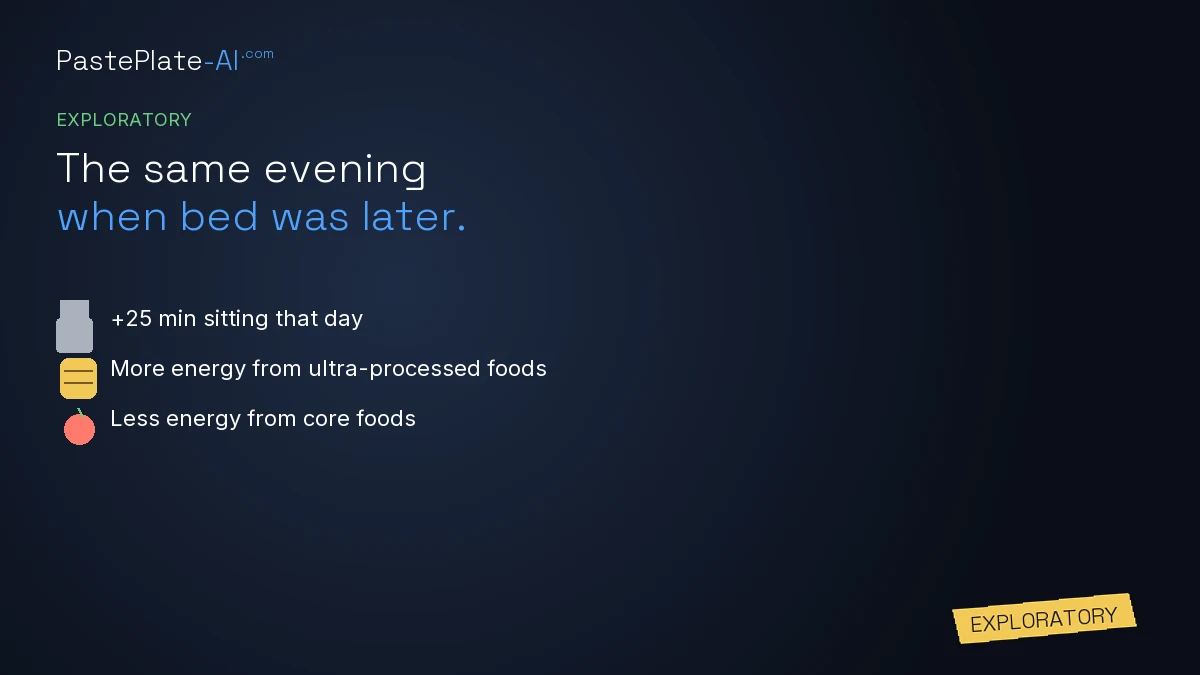
These same-day associations are labelled exploratory by the authors. They show that later nights went together with more sitting and different food choices, not that a late night causes them.
What did not show up
Next-day intake was largely stable in the reported contrasts. Activity during the day did not forecast that night's sleep in this sample. Bedtime clock mattered more than total hours asleep for several links.
How to talk with teens without scare tactics
- Focus on consistent wind-down, not fear.
- Notice whether late homework + snacks cluster; change the routine, not the person.
- Paediatric sleep questions belong with a clinician.
Limits
- Small sample, one city.
- Self-report for bedtimes.
- Observational: reverse causation possible (busy days push bed later).
This post is general information, not medical or dietary advice.
Sources
- Taylor R. W. et al. (2026), "Sleep, Dietary Intake, and Physical Activity: Examining Bidirectionality Using Repeated-Measures Analyses", Journal of Adolescent Health, online 20 Oct 2026. jahonline.org00344-7/fulltext) · doi.org
PastePlate-AI on your phone
The logbook stays on your device. You bring the chat AI you already use.
This blog does not give medical advice. Health disclaimer.